Am I a LASIK Candidate? Complete Eligibility Checklist
See our glossary for plain-language definitions of corneal thickness, topography, tear film, and related evaluation terms.
Determining whether you qualify for LASIK involves more than just having a refractive error. Your eye health, corneal anatomy, medical history, and lifestyle all factor into candidacy. This guide walks through the complete checklist so you understand what surgeons evaluate and whether LASIK is likely right for you.
The Core Candidacy Requirements
Before diving into specifics, LASIK surgeons screen for five fundamental criteria:
1. Age: At least 18 years old (21+ preferred)
2. Stable prescription: No significant changes for 12+ months
3. Adequate corneal thickness: Minimum 500 microns (typically)
4. Healthy eyes: Free from disease or significant irregularities
5. Realistic expectations: Understanding LASIK's benefits and limitations
Meet all five, and you're likely a candidate. Miss one or more, and alternative procedures like PRK, SMILE, or ICL may be better options.
Age Requirements and Vision Stability
Why 18 is the Legal Minimum
The FDA has not approved LASIK for anyone under 18 because:
- Eyes continue developing through the late teens
- Prescriptions frequently shift during adolescence
- A stable baseline cannot be reliably established
- Regression rates are higher in younger patients
At 18, legal approval exists, but your prescription should have been stable (changing less than 0.5 diopters) for at least one year before surgery.
Why Many Surgeons Prefer 21+
While 18-20 year-olds can have LASIK, many experienced surgeons recommend waiting until 21 because:
- Prescriptions are more likely to truly stabilize
- Long-term satisfaction improves significantly
- Regression and enhancement rates drop
- The final refractive error prediction is more reliable
If you're between 18 and 21 with a very stable prescription, ask your surgeon about your specific situation.
Documenting Prescription Stability
Your surgeon will review your eye prescription history, usually looking at:
- At least 2-3 years of eye exams or glasses/contact prescriptions
- Year-to-year changes in sphere, cylinder, and axis
- Consistency of refractive error measurements
Bring old glasses prescriptions, contact lens prescriptions, or past eye exam records to your consultation. This documentation directly supports candidacy assessment.
Upper Age Limits (There Aren't Any)
Contrary to common misconceptions, there is no maximum age for LASIK. However, different considerations apply:
Ages 40-50: Presbyopia (difficulty reading) begins. Monovision LASIK (correcting one eye for distance, one for near) can help, though results are individual.
Ages 50-65: Early cataracts may develop. Some patients find cataract surgery (which includes vision correction) more appropriate than LASIK alone.
Ages 65+: Multiple age-related eye changes (cataracts, presbyopia, dry eye) may make refractive lens exchange or cataract surgery preferable.
Your surgeon will evaluate whether LASIK makes sense for your age-related eye health, not age itself.
Corneal Thickness and Anatomy
Why Thickness Matters
LASIK removes corneal tissue to reshape it. Your starting thickness determines how much can safely be removed.
Normal corneal thickness: 540–550 microns (about 0.5 mm)
LASIK removal per diopter: 10–15 microns (depending on prescription and laser platform)
Safe residual bed thickness: 250–300 microns remaining after treatment
The Minimum Thickness Requirement
Most surgeons require a preoperative corneal thickness of at least 500 microns before LASIK surgery.
Remember that LASIK also creates a corneal flap (roughly 100–110 microns) in addition to the tissue removed by the laser. For example, if your cornea measures 500 microns and you need about 15 microns removed per diopter for a -8.00 prescription, that's roughly 120 microns ablated. Subtracting both the ~110-micron flap and the 120 microns of ablation (500 − 110 − 120) leaves a residual stromal bed of about 270 microns—below the 300-micron comfort line many surgeons prefer to stay above. A patient like this is a poor LASIK candidate and would typically be steered toward PRK (which creates no flap) or ICL instead.
Your surgeon uses this formula to calculate whether your individual cornea is thick enough for your specific prescription. Someone with high myopia and thin corneas might not qualify, while someone with mild myopia and normal thickness is usually fine.
Measuring Corneal Thickness
Thickness is measured with pachymetry (a quick, painless test during your evaluation). Ultrasound pachymetry or optical pachymetry (using OCT) can measure your corneal thickness to within about 5 microns.
This is one of the most critical pre-operative tests and directly determines candidacy for LASIK versus alternatives like PRK.
Corneal Shape and Regularity
Beyond thickness, your cornea's shape matters. LASIK works best on:
- Regularly shaped corneas (basketball-like, not football-like)
- Smooth corneal surfaces
- Normal corneal curvature
Corneal conditions that complicate or disqualify LASIK:
- Keratoconus: Progressive corneal thinning and bulging. LASIK is contraindicated; PRK or ICL may be options after consultation.
- Corneal scarring: From injury or disease. Surgery may worsen vision.
- Pellucid marginal degeneration: Rare condition affecting lower cornea.
- Post-refractive surgery corneas: Previous LASIK, PRK, or RK may limit retreat options.
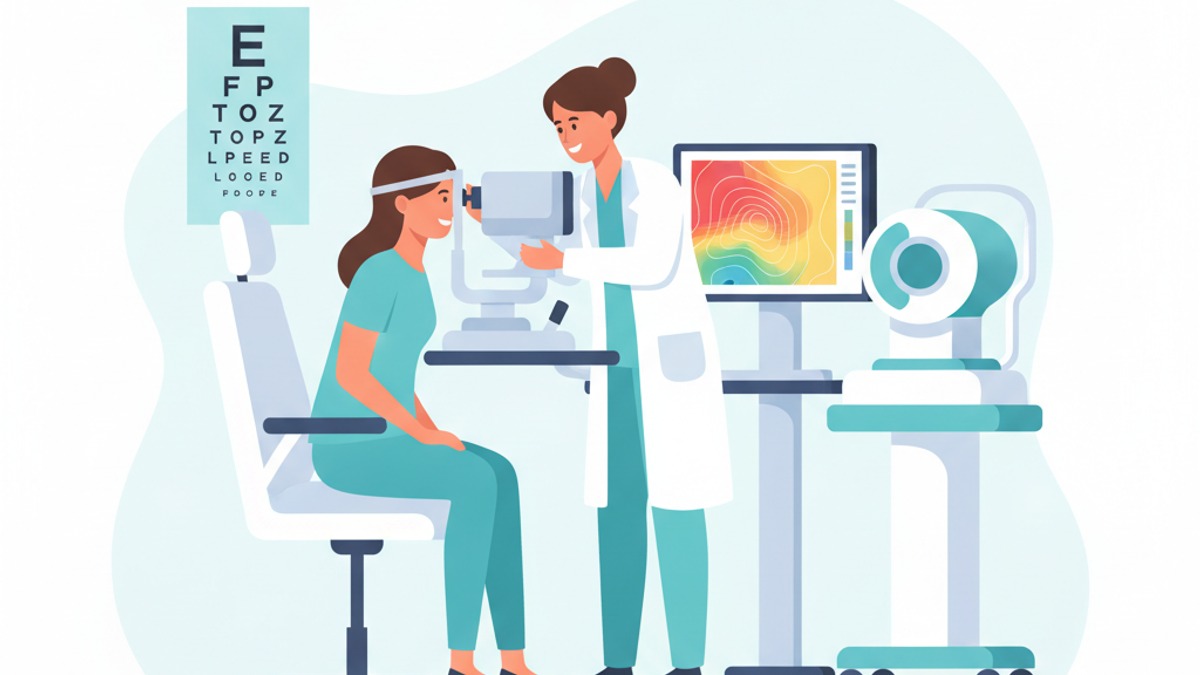
Your surgeon uses corneal topography (a detailed map of corneal shape) to identify these conditions during your evaluation.
Refractive Error Range
FDA-Approved Treatment Limits
LASIK is FDA-approved for specific prescription ranges:
- Myopia (nearsightedness): Up to -12.00 diopters
- Hyperopia (farsightedness): Up to +6.00 diopters
- Astigmatism: Up to 6.00 diopters (in any combination)
Best Outcomes Within Narrower Ranges
While the FDA limits define what's approvable, best outcomes occur in narrower ranges:
- Myopia: -1.00 to -8.00 diopters (excellent outcomes)
- Hyperopia: +1.00 to +4.00 diopters (very good outcomes)
- Astigmatism: Up to 4.00 diopters (excellent outcomes)
Higher prescriptions (e.g., -10 to -12 myopia) still achieve good results but have slightly higher regression and lower rates of achieving exactly 20/20 vision.
Outside LASIK Range? Consider Alternatives
ICL (Implantable Collamer Lens): Treats -3 to -20 diopters of myopia (a hyperopic ICL is not currently FDA-approved in the US). No corneal tissue removed; reversible.
Refractive Lens Exchange: For any prescription; especially useful after age 50 when cataracts are likely. Replaces your natural lens with a corrective IOL.
PRK: Treats similar ranges to LASIK but without creating a flap, preserving more corneal strength for borderline cases.
Eye Health and Medical Conditions
Conditions That Disqualify LASIK
Active eye diseases:
- Glaucoma (though can sometimes proceed with caution)
- Diabetic retinopathy
- Active macular degeneration
- Severe dry eye disease (may improve with pretreatment)
- Herpes simplex or zoster affecting the eye
Corneal conditions:
- Keratoconus or suspected keratoconus
- Corneal dystrophies
- Significant corneal scarring
Retinal conditions:
- Retinal detachment history (LASIK may increase risk; consult a retina specialist)
- Significant retinal disease
Conditions Requiring Extra Caution
Dry eye syndrome: LASIK temporarily worsens dry eye because corneal nerves (which trigger tears) are disrupted during flap creation. If you have moderate-to-severe dry eye, pretreatment (artificial tears, prescription drops, punctal plugs) may be needed before LASIK, or alternative procedures like PRK or SMILE may be preferable.
Large pupils: If your pupils dilate significantly in dim light (beyond 6-7mm), you may experience more halos and glare after LASIK. Still candidate-eligible but should understand this risk.
Severe nearsightedness with thin corneas: A combination of high myopia AND thin corneas is the classic candidacy problem. PRK or ICL becomes necessary.
Pregnancy or nursing: Hormonal changes temporarily shift refraction and eye pressure. Wait until at least 3 months postpartum and after nursing ends before having LASIK.
Autoimmune and Systemic Diseases
Conditions like lupus, rheumatoid arthritis, Sjögren's syndrome, and scleroderma can impair corneal healing and increase dry eye risk. Uncontrolled diabetes also affects healing. Discuss your condition with your surgeon—some patients with well-controlled autoimmune disease can still have LASIK, but others should not.
Realistic Expectations Checklist
You're a Good Fit if You Expect:
- Freedom from glasses or contacts for distance vision
- Improved quality of life and convenience
- Results that may reduce but not eliminate all vision correction needs
- Possible need for reading glasses after age 40
- A few weeks of fluctuating vision while the eye heals
- Excellent but not perfect vision outcomes in ~95% of cases
You May Not Be a Good Fit if You:
- Expect perfect 20/10 vision (unrealistic for most)
- Cannot tolerate temporary visual fluctuations
- Have unrealistic expectations about presbyopia reversal
- Believe LASIK is "free surgery" with no recovery time
- Cannot commit to follow-up care and post-operative drops
- Are hoping to skip a thorough evaluation by an ophthalmologist
The Evaluation Process: What Happens
A thorough LASIK candidacy evaluation includes:
Comprehensive Eye Exam
- Current refraction (glasses prescription)
- Visual acuity testing
- Intraocular pressure measurement
- Dilated retinal examination
- Anterior segment (front of eye) evaluation
Specialized Testing
- Corneal topography: Maps your cornea's shape and curvature
- Corneal thickness (pachymetry): Measures tissue available for reshaping
- Wavefront analysis: Measures optical aberrations unique to your eye
- Tear film evaluation: Schirmer test or other dry eye assessment
- Pupil size measurement: Determines if you're at risk for night vision issues
Medical History Review
- Current medications (some affect candidacy)
- Autoimmune or systemic diseases
- Previous eye surgery
- Ocular surface disease history
- Allergies and their severity
The entire evaluation typically takes 1.5-2 hours, and it's the most important predictor of whether you'll be satisfied with LASIK results.
The Candidacy Decision: What Comes Next
If You're Approved for LASIK
Your surgeon explains the procedure, expected results, risks, and alternatives. You'll sign consent forms and schedule surgery. Most surgeons recommend waiting 1-2 weeks between evaluation and surgery to ensure you have time to ask questions and feel confident.
If You're Not Approved for LASIK
Your surgeon should discuss why and present alternatives:
- PRK: Better for thin corneas or dry eye; longer recovery
- SMILE: For mild-to-moderate myopia; newer technology; fewer dry eye issues
- ICL: For high myopia, thin corneas, or farsightedness; reversible; more invasive
- Refractive Lens Exchange: For presbyopia or cataract-prone eyes
- Monitoring: Sometimes waiting 6-12 months for prescription stabilization is the answer
If You're a Borderline Candidate
Some surgeons may proceed cautiously with advanced techniques (topography-guided treatment, smaller optical zones, lower treatment thresholds) or recommend a different procedure. A second opinion from another qualified surgeon can clarify your options.
Final Thought: Candidacy Isn't All-or-Nothing
Being "a LASIK candidate" isn't a binary yes-or-no. It's a personalized assessment of whether LASIK, among all vision-correction options available, offers you the best safety and outcomes profile. A comprehensive evaluation by an experienced surgeon is the only reliable way to determine your true candidacy—and to make sure you choose the procedure best suited to your unique eyes and lifestyle.
Related LASIK Surgeons

Related LASIK Practices in Atlanta
View all 33 practices →Ready to Learn More?
Find a LASIK surgeon in Atlanta and schedule a free consultation.
Find a Surgeon